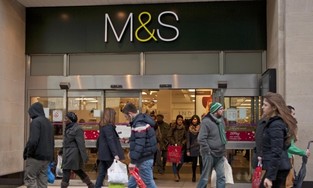
It has been 5 years since the Global Financial Crisis, and economic recovery is well overdue. The IMF cited that the two most likely global risks for economic resilience is, fiscal imbalances and income disparity. The Footwear industry has certainly been impacted by both.
You should include adverse weather, which has seen winter collections and summer collections selling so slow, that sales have been the feature of most retailers for far too long.
According to Euromonitor.com - Apparel and footwear has seen an hourglass consumption shape for 2013. This means that consumers are paying for premium and economy products over the mid price products.
The pattern appears to be, that the little growth in 2013, was not in Europe. Look at these figures from Europe:
Italy had unemployment levels of 12% in general, and 35% amongst the young.
Switzerland’s low temperatures resulted in retailers selling summer products cheap.
The men’s footwear section was hardest hit in the Netherlands, men did not spend as much on athletic shoes in favour of pairing up smart/casual look.
Pretty much the same could be said for Spain, France, Greece, Portugal.
The few glimmers of hope came from Austria, Finland and Poland who all saw an increase of 1% in their apparel and footwear sales.
The rest of the world fared better, however still painting a picture of cautious sales.
Age UK, a charity dedicated to helping everyone make the most of later life, implemented a marketing campaign utilising Stackla aimed at changing people’s attitudes towards ageing and getting them to celebrate later life.
The charity kicked off the campaign with a TV advert featuring a poem written by Roger McGough that describes ageing as a “way of life” with people encouraged to share their ‘stories’ on social media about why age wasn’t a barrier to enjoying life.
The TV spot is supported by a “Love Later Life” social hub platform provided by Stackla that shows social stories from Age UK and the public that also features support from celebrities including Sir Roger Moore, Alastair Stewart and Zoe Wanamaker.
It aims to encourage people to think differently about getting older and demonstrate older people’s role in society.
Clients are rightly demanding more transparency in digital advertising, writes Infectious Media'sDaniel de Sybel - but are they focused on the right type? It's time to make some clear distinctions.
"Transparency" in online display advertising has become somewhat of a dirty topic. Being accused of lacking transparency now carries connotations of nefarious media executives planning new ways of making money by increasingly obscure means. Advertisers are seen as the victims, tempted by promises of smart technology and more efficient buying, persuading them to spend more in areas they don't really understand.